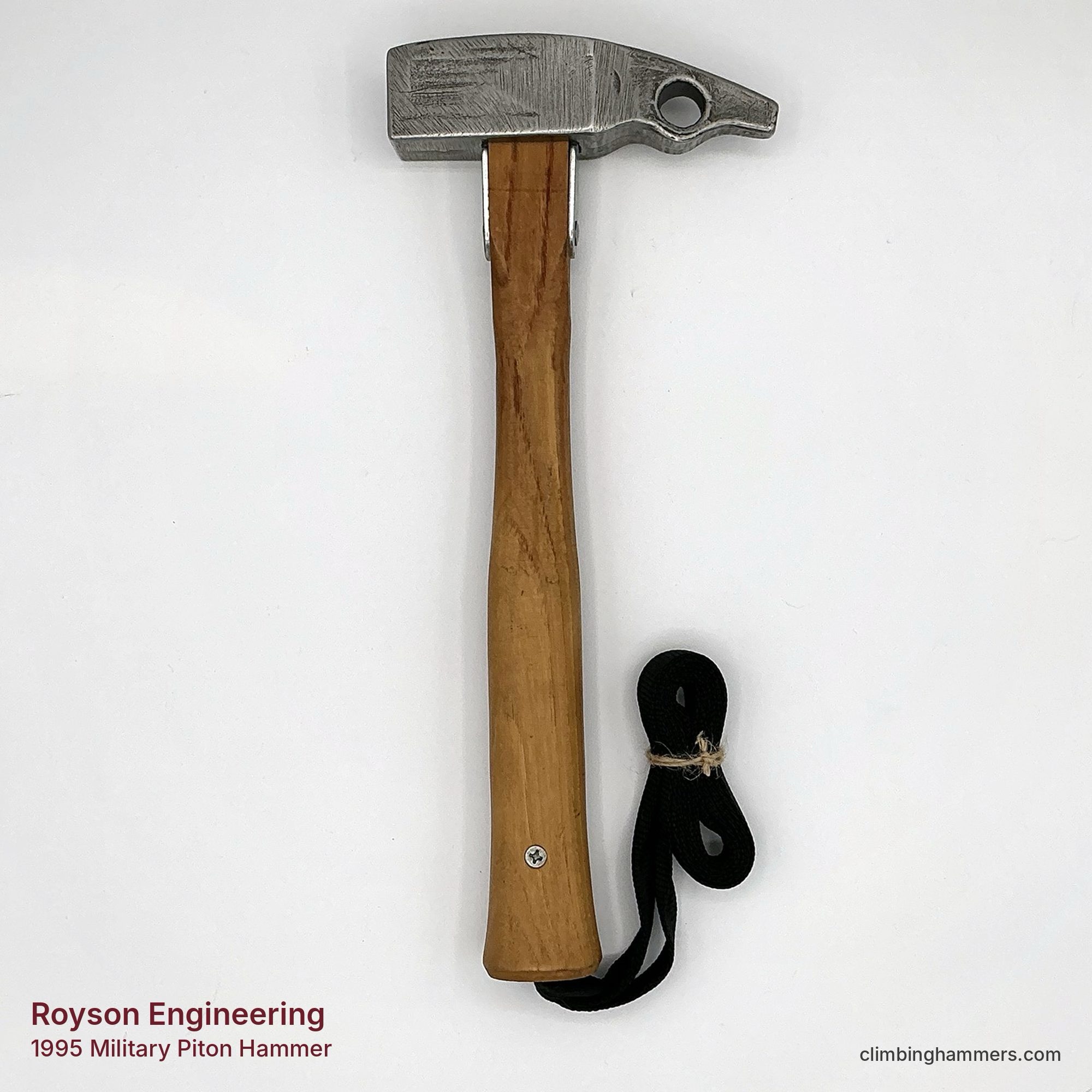
By the mid-1990s most civilian climbers had put their hammers away. Clean climbing had long since replaced pitons on most American rock, and a new piton hammer was something you bought for big walls or not at all. The US Army was still buying them. Its climbing-equipment set listed pitons, snow anchors, crampons, an ice axe and a “Hammer, Rock and Ice,” and someone had to make them.
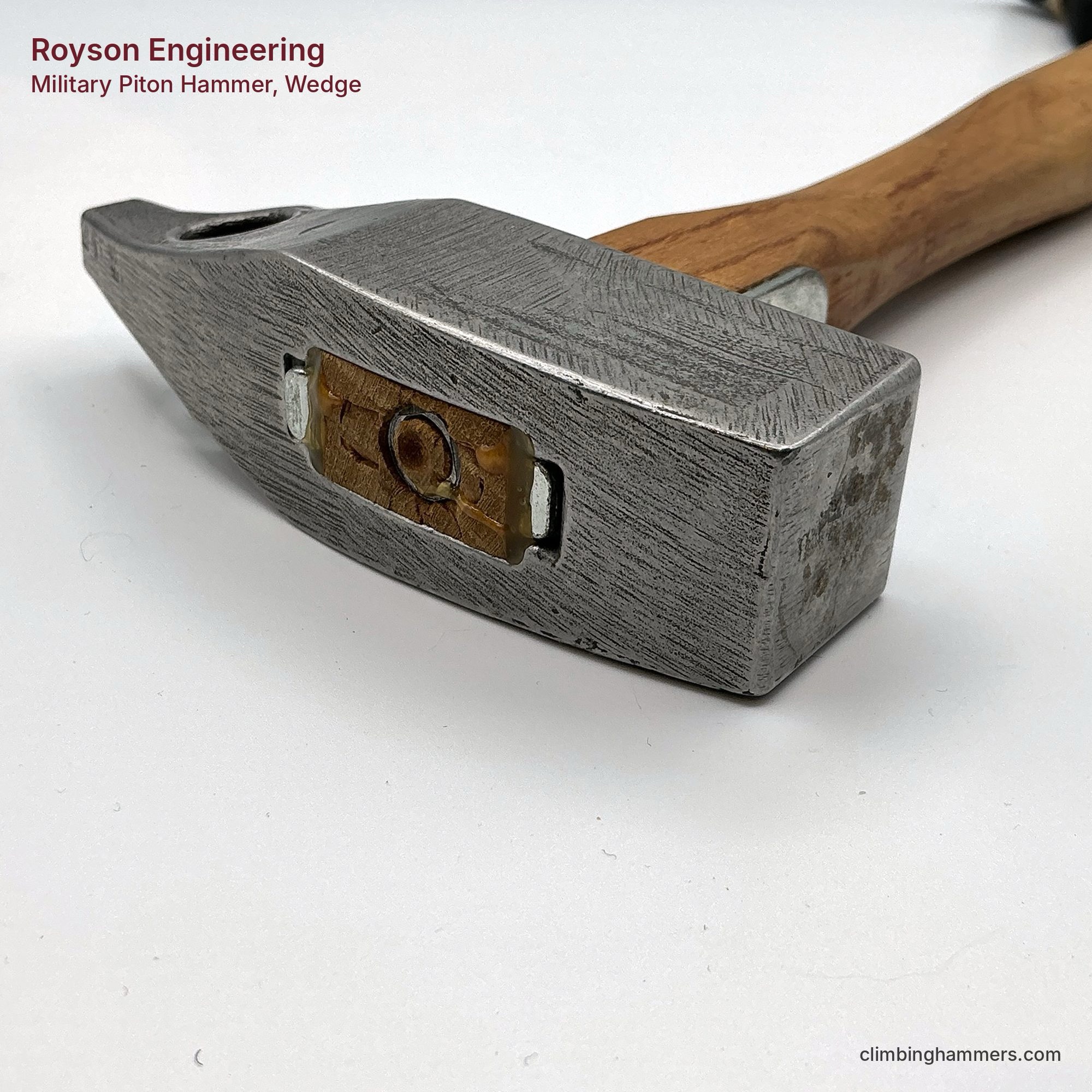
This piece is one of those government hammers. At a glance it looks like a Chouinard or Black Diamond Yosemite: the same overall pattern, the same handle shape, the same carabiner hole through the pick. Hammers like it are often taken for Chouinard or Black Diamond hammers made for the military. They aren’t. The stamp on the strap and the label on the box identify the maker as Royson Engineering Company of Hatboro, Pennsylvania, a machine shop with no other known climbing products.
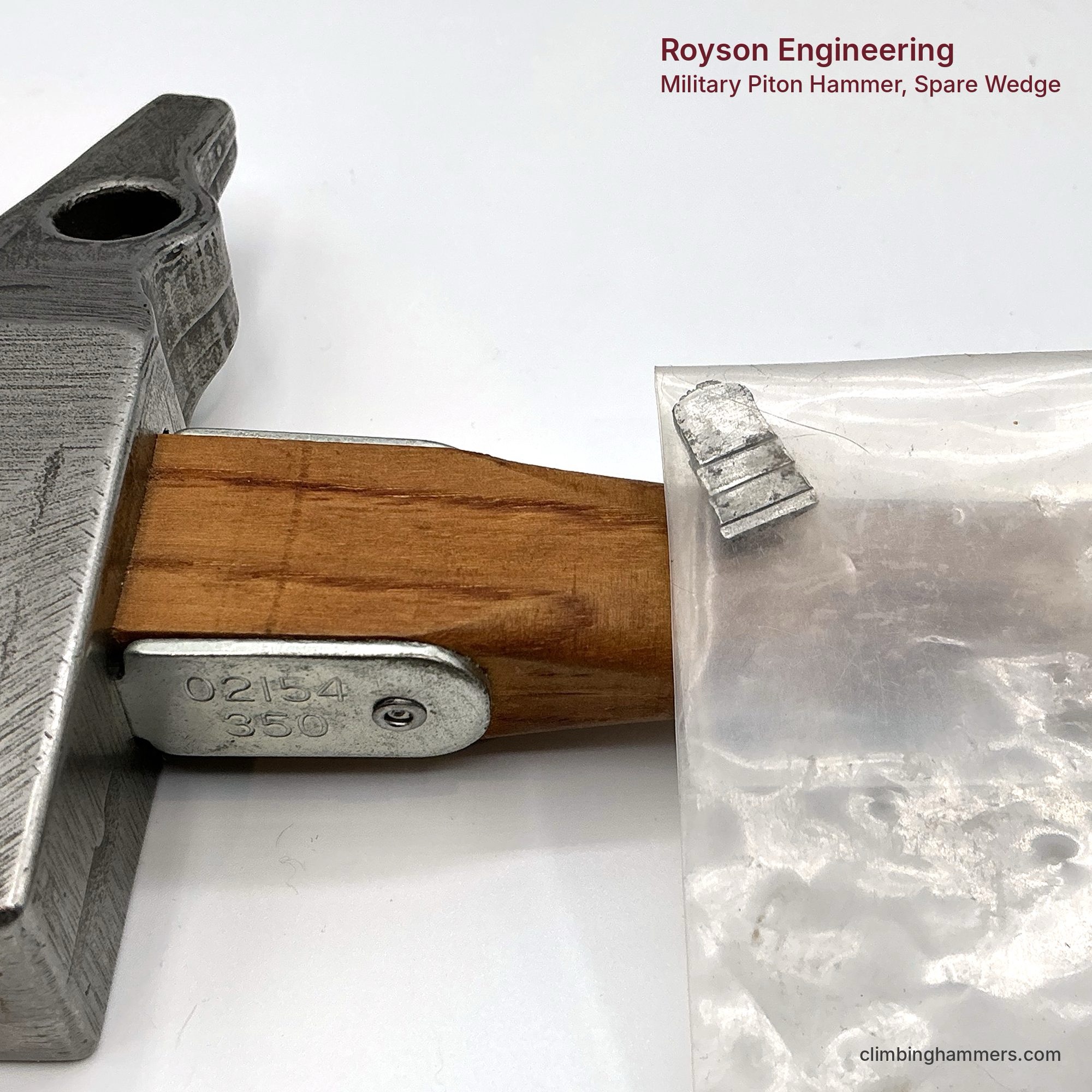
This one has never been used. It is new old stock (NOS), still in its original government box, with a spare wedge in a small plastic bag.
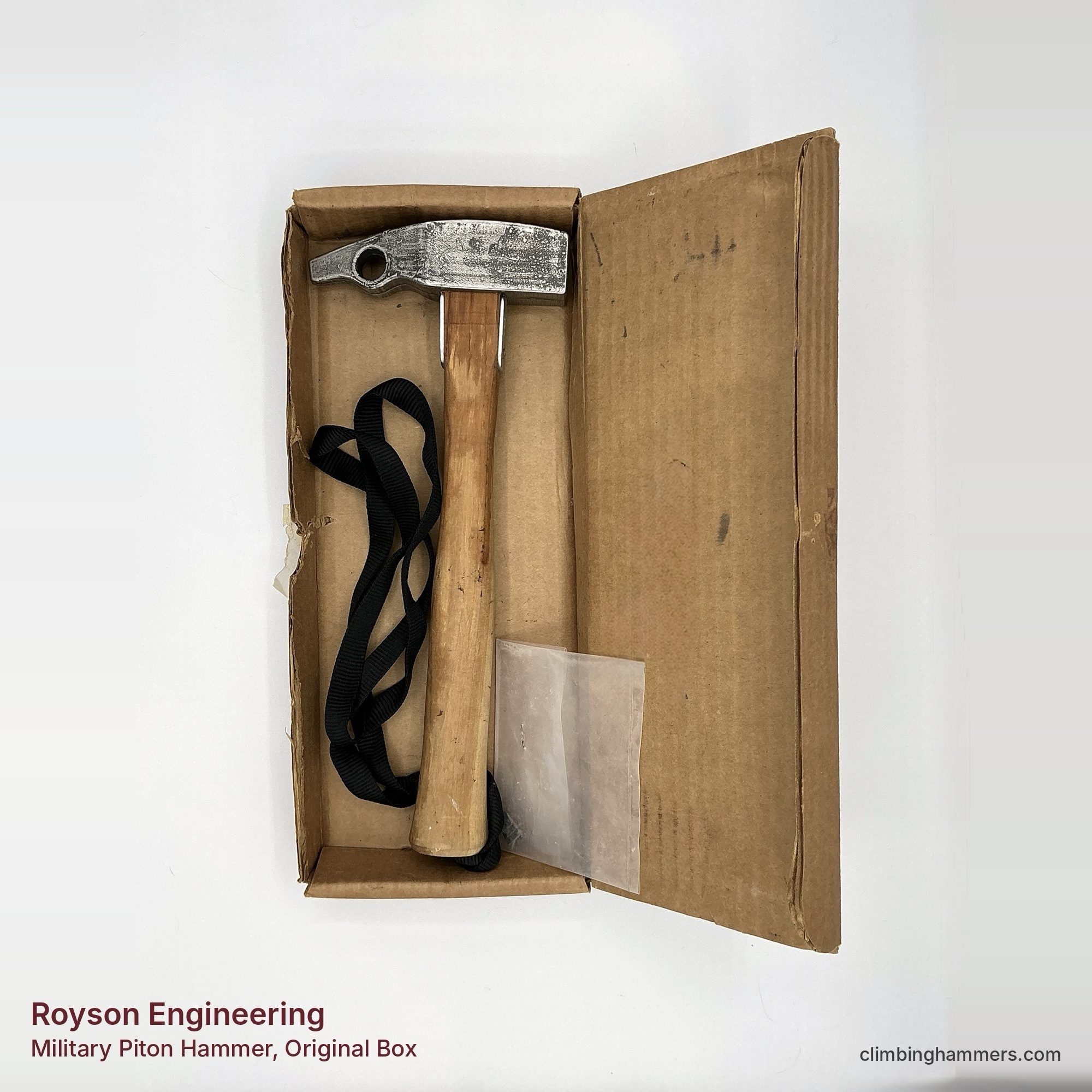
Identifying the Piece
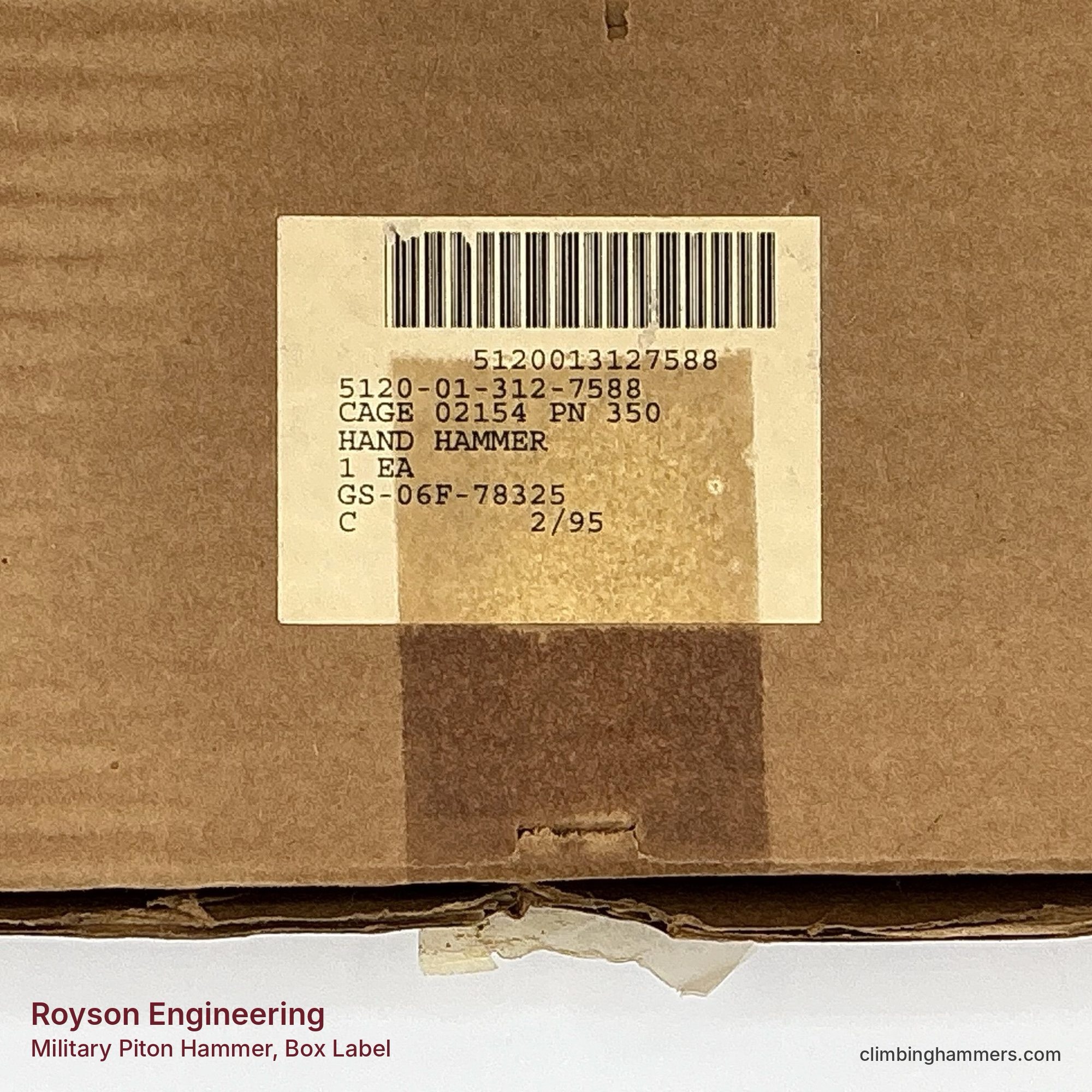
The front reinforcing strap is stamped “02154 PN 350”: Royson’s government supplier code (CAGE 02154) and its part number. The box carries the full supply label:
- NSN 5120-01-312-7588, Hand Hammer
- CAGE 02154, part number 350
- GSA contract GS-06F-78325
- Dated 2/95
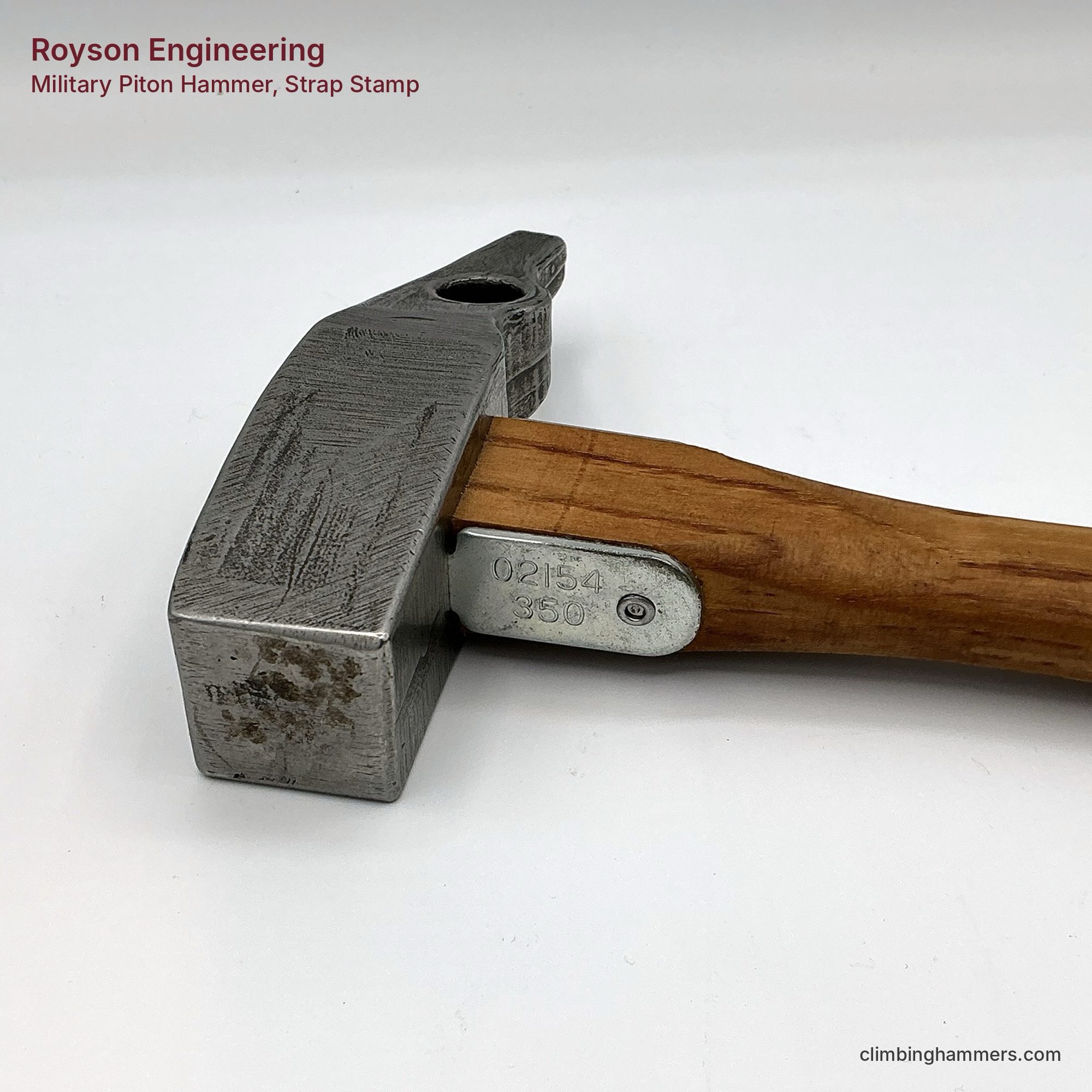
Look for a hickory handle, steel reinforcing plates riveted at the head, a round steel wedge at the top of the handle, a lanyard held in the end of the handle by a Phillips screw, and a pick with a carabiner hole. Without the box, it can still be identified: look for the 02154 stamp on the strap, the larger head with its keystone-shaped face, and the polished finish.
The Maker
Royson Engineering began in 1950 as a tool and die company and is best known for vibratory finishing machines: the tumblers and bowls industry uses to deburr and polish metal parts. Like many small American manufacturers, it also bid on government supply work, from rigging blocks to shoring. A piton hammer seems an odd job for a finishing-machine company, but for a tool and die shop it was a forging, a handle and a few rivets. The polished head may owe something to the company’s trade.
How It Differs from the Chouinard and Black Diamond
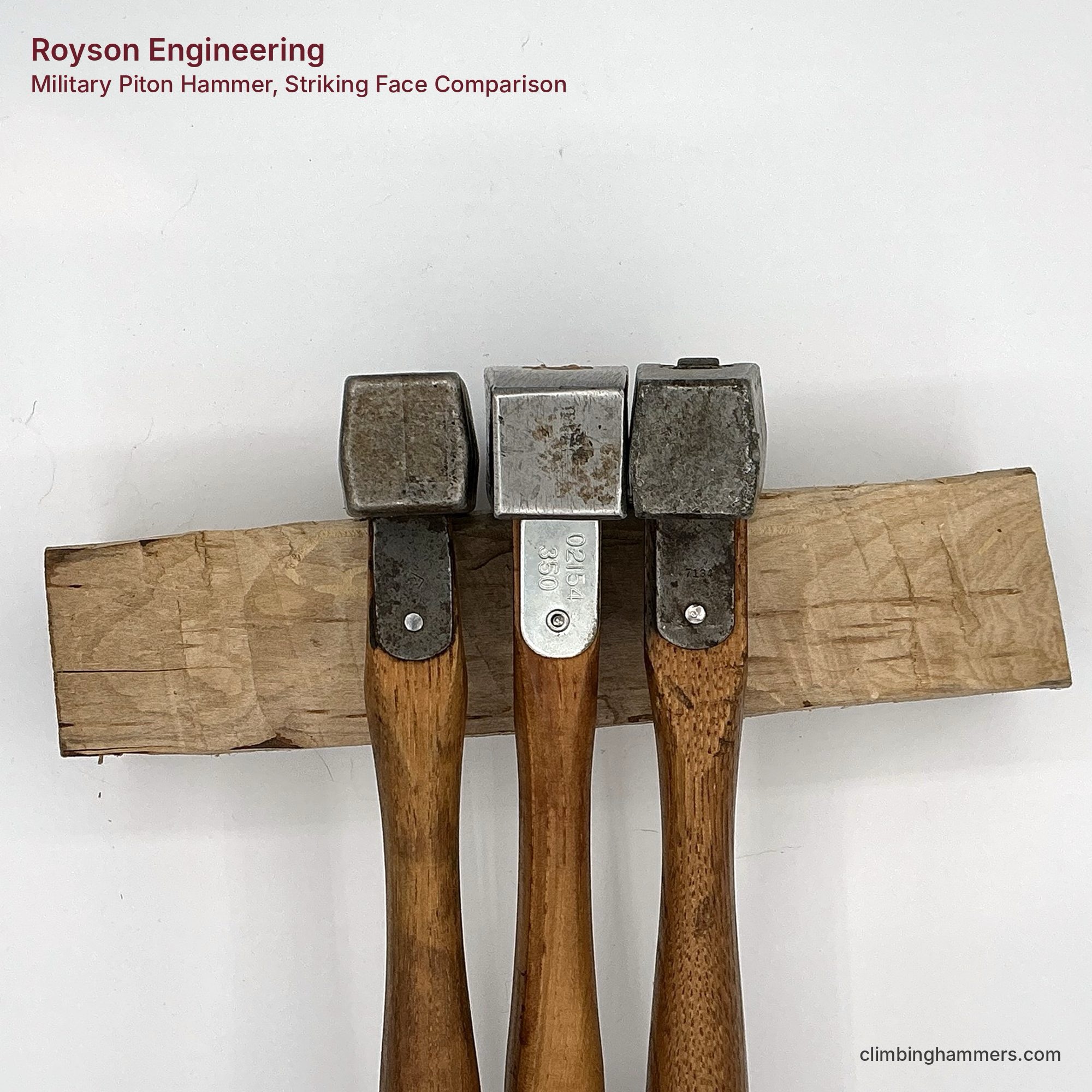
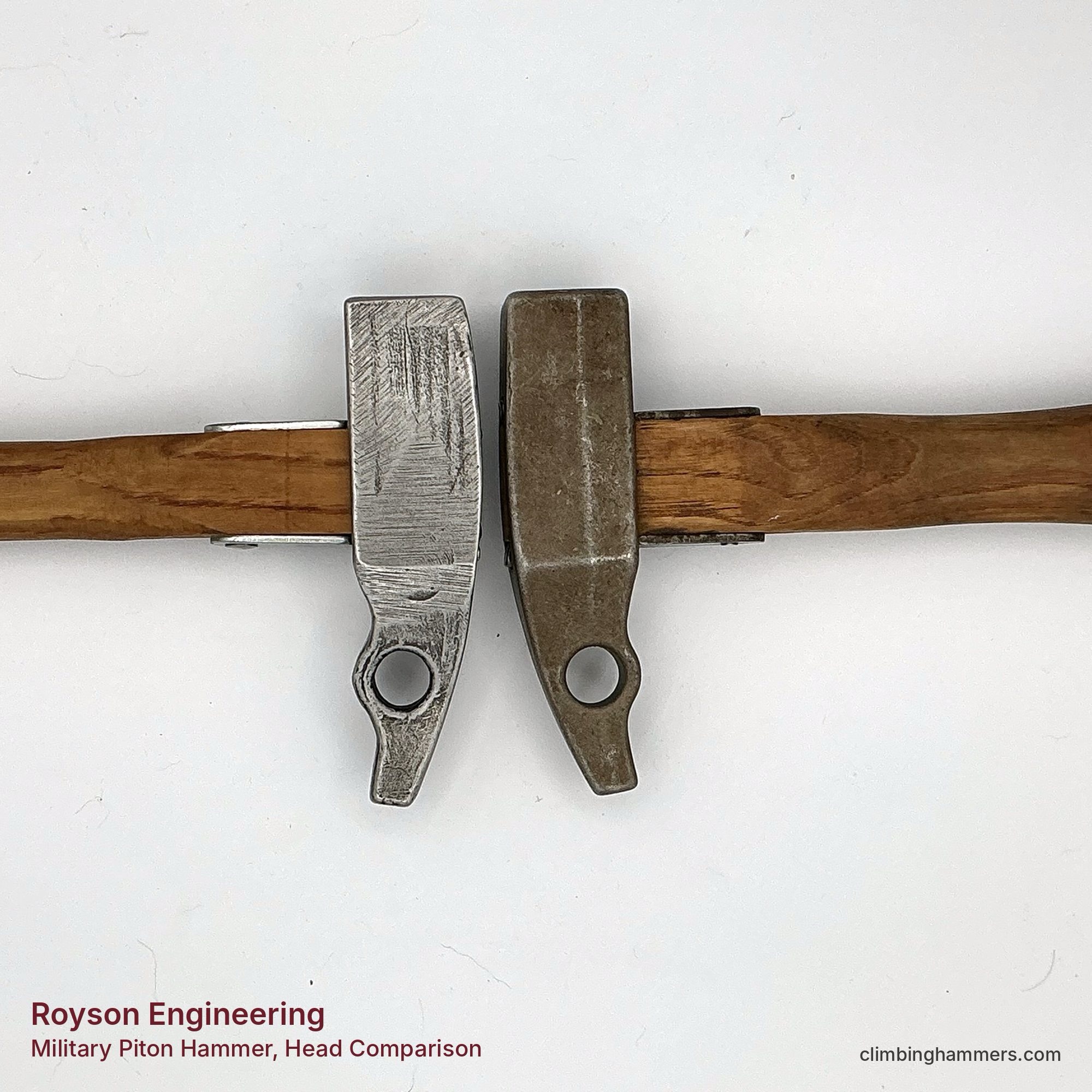
Side by side with the 1988 Chouinard Yosemite and the 1994 Black Diamond Yosemite in this collection, the overall pattern and handle shape are the same, but the head is not. The Chouinard and Black Diamond heads measure the same; the Royson head is its own.
| Royson, 1995 | Chouinard, 1988 / Black Diamond, 1994 | |
|---|---|---|
| Across the top of the head, at its widest point | 1 5/16″ | 1 1/16″ |
| Striking face | 1/8″ wider across its top edge; keystone, widest at the top | Widest in the middle, narrowing top and bottom |
| Head finish | Polished, more finished | Standard finish |
| Handle | Same shape, plainer finish | Finer finish |
Which Specification?
The handle, riveted reinforcing plates and steel wedge follow the Army’s piton hammer specification, MIL-H-1431B (1972), which also allowed an unpainted, polished head. The head’s shape is the exception: it matches neither the Army drawing nor the Chouinard and Black Diamond heads. MIL-H-1431B stayed in force until June 1995, a few months after this box was dated, and was then replaced by a commercial item description. Which one this contract used isn’t known.
The government catalog entry for this stock number now describes a different hammer: a fiberglass handle with a removable pick. No example of that version has turned up.
Sources: MIL-H-1431B, Military Specification: Hammer, Hand (Piton, Mountain), and Notice 3 (cancellation, 1995), from ASSIST; the catalog record for NSN 5120-01-312-7588; Royson Engineering; and SuperTopo, Date This Chouinard Yosemite Hammer (2012). Measurements and condition from the collection. Have one of these, or know anything about Royson’s government contract? Let me know.

